And you were dead in the trespasses and sins in which you once walked, following the course of this world, following the prince of the power of the air, the spirit that is now at work in the sons of disobedience— among whom we all once lived in the passions of our flesh, carrying out the desires of the flesh and the mind, and were by nature children of wrath, like the rest of mankind. But God, being rich in mercy, because of the great love with which he loved us, even when we were dead in our trespasses, made us alive together with Christ—by grace you have been saved— and raised us up with him and seated us with him in the heavenly places in Christ Jesus, so that in the coming ages he might show the immeasurable riches of his grace in kindness toward us in Christ Jesus. For by grace you have been saved through faith. And this is not your own doing; it is the gift of God, not a result of works, so that no one may boast. For we are his workmanship, created in Christ Jesus for good works, which God prepared beforehand, that we should walk in them. Ephesians 1:1-10
I frankly confess that, for myself, even if it could be, I should not want “free-will” to be given me, nor anything to be left in my own hands to enable me to endeavour after salvation; not merely because in face of so many dangers, and adversities and assaults of devils, I could not stand my ground ; but because even were there no dangers. I should still be forced to labour with no guarantee of success.¦ But now that God has taken my salvation out of the control of my own will, and put it under the control of His, and promised to save me, not according to my working or running, but according to His own grace and mercy, I have the comfortable certainty that He is faithful and will not lie to me, and that He is also great and powerful, so that no devils or opposition can break Him or pluck me from Him. Furthermore, I have the comfortable certainty that I please God, not by reason of the merit of my works, but by reason of His merciful favour promised to me; so that, if I work too little, or badly, He does not impute it to me, but with fatherly compassion pardons me and makes me better. This is the glorying of all the saints in their God.” – Martin Luther, The Bondage of the Will (Grand Rapids: Revell, 1957), 313-314.
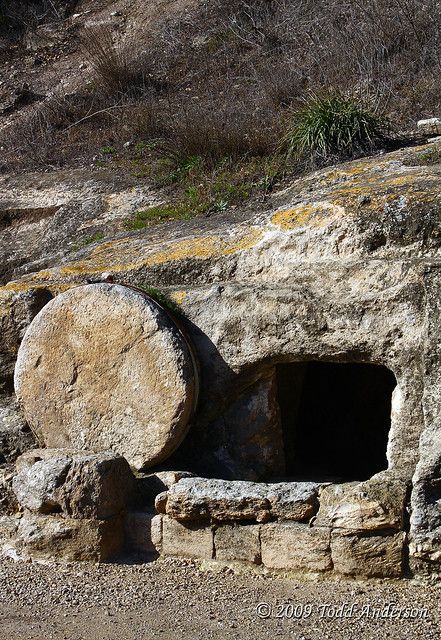
George Whitfield, the great Calvinistic evangelist, compared this to Christ’s raising Lazarus: “Come, ye dead, Christless, unconverted sinners, come and see the place where they laid the body of the deceased Lazarus; behold him laid out, bound hand and foot with grave-clothes, locked up and stinking in a dark cave, with a great stone placed on the top of it. View him again and again; go nearer to him; be not afraid; smell him. Ah! How he stinketh…. Was he bound hand and foot with grave-clothes? So art thou bound hand and foot with thy corruptions: and as a stone was laid on the sepulchre, so is there a stone of unbelief upon thy stupid heart. Perhaps thou hast lain in this state, not only four days, but many years, stinking in God’s nostrils. And, what is still more effecting, thou art as unable to raise thyself out of this loathsome, dead state, to a life of righteousness and true holiness, as ever Lazarus was to raise himself from the cave in which he lay so long. Thou mayest try the power of thy own boasted free-will, and the force and energy of moral persuasion and rational arguments (which, without all doubt, have their proper place in religion); but all thy efforts, exerted with never so much vigor, will prove fruitless and abortive, till that same Jesus, who said, ‘Take away the stone,’and cried ‘Lazurus, come forth,’ also quicken you.”
James Montgomery Boice
C.S. Lewis described this love by saying, “God, who needs nothing, loves into existence wholly superfluous creations in order that he may love and perfect them. He creates the universe, already forseeing—-or should we say ‘seeing’? There are no tenses in God—-the buzzing cloud of flies about the cross, the flayed back pressed against the uneven stake, the nails driven through the mesial nerves, the repeated torture of back and arms as it is time after time, for breath’s sake, hitched up….Herein is love. This is the diagram of Love Himself, the inventor of all loves.”
James Montgomery Boice
 "To Live Upon God Who is Invisible" John Bunyan